
Loose Skin After Weight Loss: What RF Microneedling Can Realistically Do
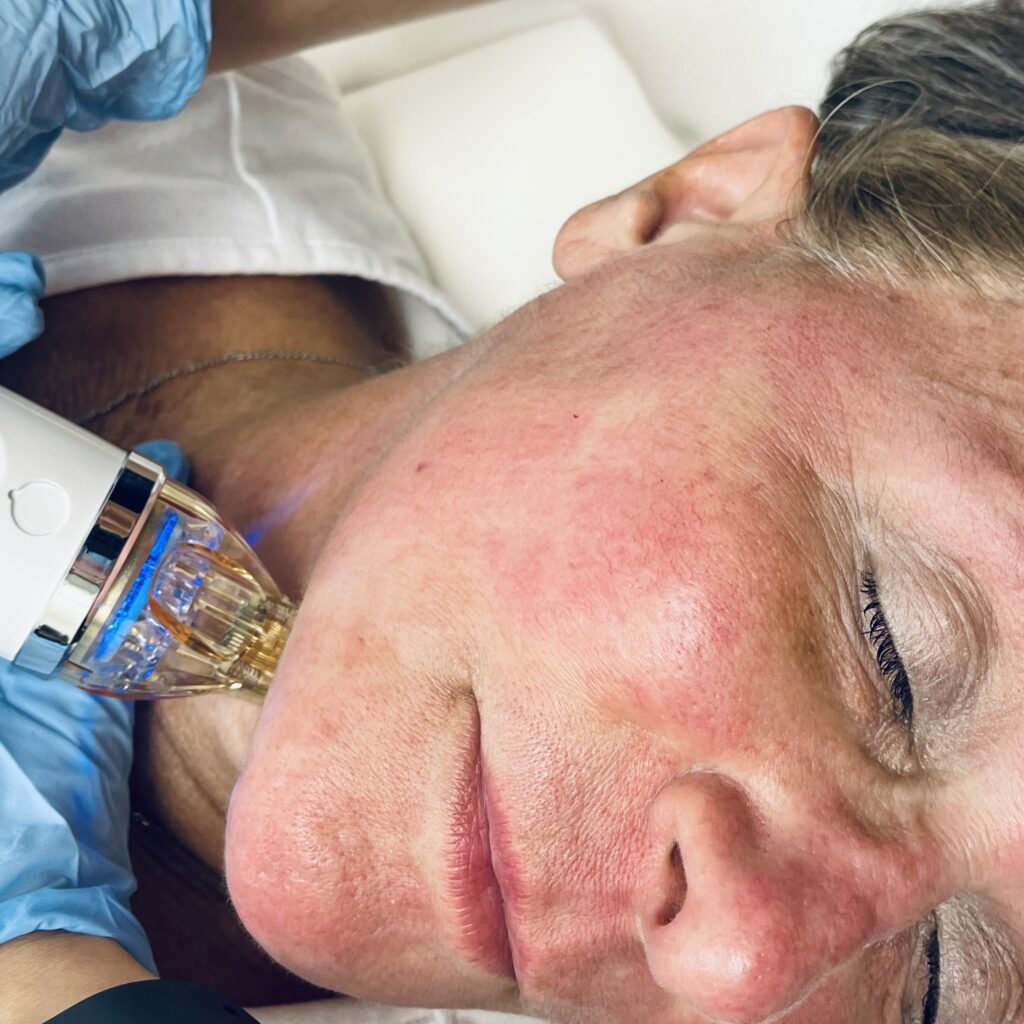
Weight loss comes with loose skin, not always, but often. Previously we talked about why that happens, how to prevent it, and what to do to treat. Today, we’re going more in depth on how RF microneedling can help.
If you’ve lost a significant amount of weight — especially with GLP-1 medications like semaglutide or tirzepatide — you’re not alone in noticing that your skin didn’t quite keep up. Surveys show that among patients who’ve lost 20 or more pounds on GLP-1 therapy, nearly two-thirds want skin tightening, and over 40% say loose skin is their number-one complaint.
So let’s talk about one of the most-asked-about options: RF microneedling for body skin tightening. What it actually does, what it can’t do, and how to know if you’re a good candidate.
How weight loss creates laxity
Your skin’s structural scaffolding — collagen and elastin — takes time to adapt when the tissue beneath it shrinks. Rapid or substantial weight loss can outpace the skin’s ability to remodel, leaving a framework that no longer fits its foundation. Age, genetics, chronic sun exposure, and how long the skin was stretched all influence how much natural retraction you’ll get on your own.
What RF microneedling does beneath the surface
RF microneedling works by delivering radiofrequency energy through tiny insulated needles directly into the dermis — the deeper layer where collagen and elastin live. The needles bypass the surface of the skin, creating controlled micro-zones of thermal energy right where remodeling needs to happen.
That targeted heat does two things. First, it causes immediate contraction of existing collagen fibers. Second — and more importantly — it activates fibroblasts, the cells responsible for building new structural proteins. Research shows that treated tissue upregulates TGF-β and epidermal growth factor, key molecular signals that drive fresh collagen and elastin production.
By four weeks after a RF microneedling treatment, if you take a skin sample and look under the microscope, you’ll see denser, better-organized collagen with an improved collagen type I-to-III ratio — the signature of stronger, firmer skin.
What the evidence says
A 2026 systematic review in Aesthetic Plastic Surgery analyzed 41 clinical studies — including 15 randomized controlled trials. RF microneedling consistently improved skin laxity, wrinkle scales, and dermal density (how firm the skin is). Clinical trials report 20-60% improvement in laxity and texture after one to three treatment sessions. The results appear gradually over one to three months and lasting six months or longer.
Patient satisfaction in these studies runs high, and the safety profile is favorable across all Fitzpatrick skin types. Because the RF energy is limited to the tip of the needles, it doesn’t damage the surface of the skin. That’s why RF microneedling is safe on even people with darker skin tones. The most common side effects — redness, mild swelling, and temporary tenderness — typically resolve within one to three days.
Who is a good candidate — and who might need more
RF microneedling is a strong option for mild to moderate skin laxity: jawline and neck, the abdomen, arms, inner thighs, and areas where skin has lost some elasticity but still has reasonable recoil. If you pinch the skin and it bounces back slowly rather than hanging, energy-based tightening can meaningfully improve tone and texture over a series of three to four treatments spaced 4-6 weeks apart.
What RF microneeding cannot do is replace surgery for significant skin redundancy. Hanging aprons of abdominal skin, pronounced bat-wing arms, or severe thigh laxity typically need excisional procedures (tummy tuck, arm tuck) to achieve meaningful change. A good provider will tell you that honestly — and at Eocene, we always will.
Your skin may benefit from a layered approach: RF microneedling to improve skin quality and firmness in areas with mild-to-moderate laxity, laser skin resurfacing to improve texture, selective volume replenishment in areas of undesirable fat loss, and sometimes surgical contouring where it’s needed. (In fact, many plastic surgeons will do RF microneedling in the OR to tighten the remaining skin after they cut out the excess. If you’re a surgical candidate, make sure to ask your surgeon about this step.)
Ready to address loose skin in Springfield?
If weight loss has changed how your skin fits, a complimentary consultation at Eocene Medical Spa can help you understand what’s realistic for your body. We’ll assess your skin’s elasticity, discuss your goals, and recommend a plan — whether that’s RF microneedling, a combination approach, or a referral to a trusted surgical colleague when that’s the better path.