
Preventive Botox: When to Start and What to Actually Expect
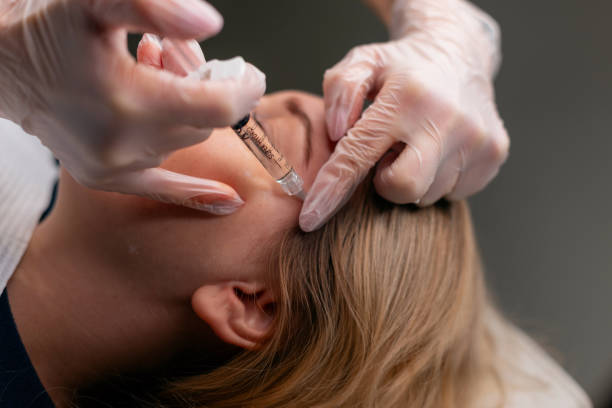
We see patients from all ages and walks of life at the medspa. Yes, there’s the stereotypical “medspa” customer, but the range of patients we take care of are much more diverse. I take it as a sign that aesthetic medicine is gaining wider acceptance, and that’s an encouraging trend.
Among our patients are many first timers to neuromodulators and aesthetic treatments. I hear both “Am I too young for Botox?” and “Did I wait too long?” on a daily basis.
The honest answer to both: probably not. Preventive neuromodulator treatment isn’t about hitting a magic birthday. It’s about reading what your face is already telling you.
It’s not about age — it’s about what you see in motion
The American Society of Plastic Surgeons puts it plainly: timing should be based on what the face is doing, not how old a patient is.
What I look for in a consult:
- Early dynamic lines that linger. Raise your eyebrows at the mirror, squint, smile, then relax. If those forehead creases, “elevens” between the eyebrows, and “crow’s feet” on either side of your eyes take a beat to smooth out — or don’t quite disappear — that’s your signal.
- Strong, repetitive muscle movement. Some people are naturally expressive, and that’s beautiful. But certain patterns (chronic furrowing, deep squinting) etch faster than others.
- Family history. If a parent or sibling developed deep static lines relatively young, your biology may be primed for the same trajectory.
Many patients notice these signs in their mid-to-late 20s; others not until their early 40s. Both timelines are normal. The goal isn’t “start as early as possible” — it’s start strategically when treatment can actually shift the outcome.
How preventive differs from corrective
Preventive doses are typically lower than what you’d need to soften lines that are already deeply set. Think of it as a soft brake on the muscles that fold your skin repeatedly — not a freeze. You should still look like yourself; your face should still move.
Neuromodulators reduce the extremes of repetitive contraction today so those folds don’t carve into permanent creases over the next decade.
Common preventive treatment areas:
- Glabellar complex (the “elevens” between the brows)
- Forehead lines
- Early crow’s feet
Because doses are conservative, results feel subtle. And that’s the point.
What maintenance looks like
Neuromodulators are temporary — effects typically last three to four months, sometimes longer depending on the product and your metabolism. For preventive patients, we might space visits every four to five months since lower doses allow more gradual muscle recovery.
Over time, some patients find they need less product, not more. Muscles that aren’t contracting at full force may gradually soften their baseline tone. But this isn’t guaranteed, and stopping treatment means the effect eventually fades. No permanent changes. No irreversible commitment.
What preventive Botox is not
It’s not a guarantee against aging — genetics, sun exposure, sleep, and overall skin health all contribute to how your face changes. Softening dynamic wrinkles is only one part of preventive aesthetic medicine.
It’s not a universal necessity. And it’s not something you should feel pressured into because a trend says you “should have started at 25.”
If you have smooth skin at rest, minimal dynamic creasing, and no urgency — waiting is a perfectly valid choice.
Ready to find out if preventive neurotoxin is right for you in Springfield?
A complimentary consultation at Eocene is where we put all of this in context for your anatomy, muscle patterns, and goals. We’ll look at your skin in motion, discuss whether treatment makes sense now or later, and — if you’re a good candidate — design a conservative plan that keeps you looking like yourself for the long run.