
Signs of Collagen Loss in Your Face — and What to do about it
A woman in her 30s, active, no chronic issues, well put together, walks into a medspa (or grabs me at a social gathering, or stops me in the hallway of my hospital because she knows I run a medspa) and tells me her skin looks tired. She can’t quite put a finger on what changed, but she wants to look less tired.
Usually, what changed is collagen.
What collagen does (and when it starts slipping)
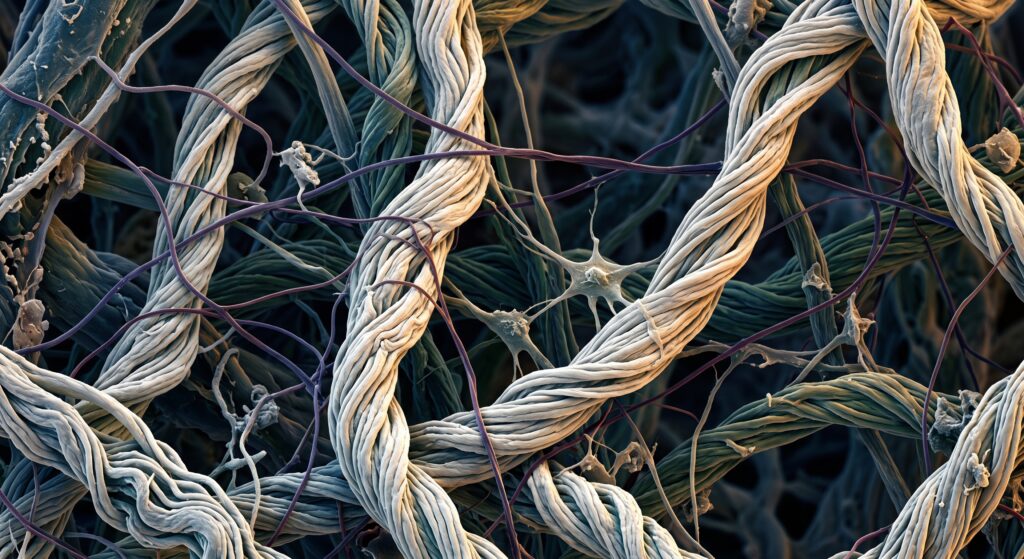
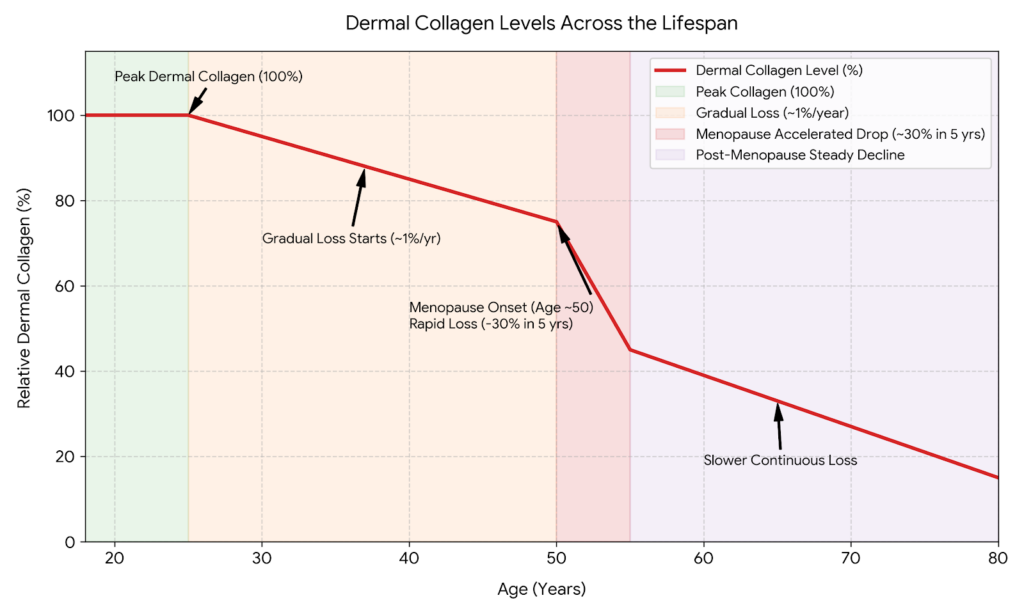
Collagen is the structural protein that gives your skin its thickness, bounce, and resilience. Starting in your mid-20s, you lose roughly 1% of your dermal collagen per year. After menopause, that rate accelerates sharply — up to 30% in the first 5 years, according to the American Society of Plastic Surgeons.
The math is quiet at first. Then it isn’t.
By the time you’re in your sixties, you have less than 1/3 of collagen left in your skin.
Signs you might notice
What does collagen loss look like? This question is rhetorical because you and I, as women in our 30s and 40s, are already experiencing this everyday.
The earliest clues tend to be textural rather than dramatic:
- Fine lines that stick around. Crow’s feet, smile lines, and forehead creases that used to disappear when your face was at rest start lingering.
- Skin that feels thinner or drier. A subtle crepey quality, especially around the eyes and neck, even when you’re well-hydrated.
- Less bounce. Press your cheek gently — younger skin snaps back immediately (do this on your kids and compare to your own). When collagen thins, the rebound slows.
- Softer contours. A jawline that’s less defined, slight hollowing under the eyes or in the cheeks. This is volume loss at the structural level.
- Dullness and larger pores. As the dermal scaffold loosens, pores can appear more prominent and your overall tone can flatten.
These changes aren’t always linear. Sun exposure, stress, sleep debt, and smoking all accelerate collagen breakdown. UV radiation is the single biggest external driver.
What actually helps
The American Academy of Dermatology and American Society of Plastic Surgeons agree on the hierarchy, and so do we:
1. Daily broad-spectrum sunscreen (SPF 30+). The most impactful single habit you can adopt. UV damage fragments existing collagen and suppresses new synthesis. If you do one thing, protect what you have.
2. Retinoids. Prescription tretinoin or over-the-counter retinol both stimulate collagen production and speed cell turnover. Start with the gentlest formula, apply at night, and use consistently. Retinoid effect compounds over weeks to months.
3. In-office collagen stimulation. When topicals and habits plateau, procedural options can meaningfully rebuild what’s been lost. RF microneedling, biostimulators like Sculptra, and targeted laser treatments like laser genesis and Picofy revitalization each trigger your own fibroblasts to lay down new collagen over months. (We provide all of the above treatments at Eocene. When you see us for a consult, we recommend 1-2 options that would work the best for your skin type.) The best outcomes typically come from starting before the loss is severe — the concept behind “collagen banking.”
4. Lifestyle foundations. You know what’s entailed. Consistent sleep, a balanced diet rich in vitamin C and protein, stress management, daily hydration. Life habits won’t reverse structural loss on their own, but they support the biology your treatments are working with.
Ready to assess your collagen health in Springfield, Illinois?
Every face ages differently, and what you notice first depends on genetics, sun history, and skin type. A complimentary consultation at Eocene Medical Spa lets us map where your skin stands today. Together, we’ll identify early collagen changes and build a plan that makes sense for you, and save you from the cliff of collagen decline.