
Temple Hollowing: Why It Happens and How to Treat
Patients coming in for an aesthetic medicine consult tend to point to the same places: their forehead lines, the skin around their eyes, maybe their jawline. The temples? Almost never. And yet when I point out that those subtle hollows on either side of the forehead are part of why their face looks “tired” or “older,” the reaction is: I never thought about that area.
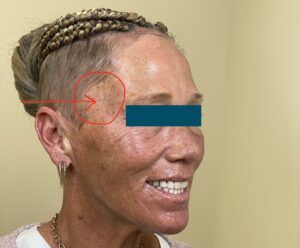
You are not alone. The temples are one of the most overlooked zones in facial aging — and one of the most impactful to treat.
What causes temple hollowing?
Three things happen as we age. The fat pads beneath the skin in the temporal region shrink. The underlying bone gradually loses density. And the temporalis muscle itself can thin. The result is a visible concavity — a hollow — on either side of the face between the brow and the hairline.
If you have lost significant weight, the change can be more pronounced. Patients on GLP-1 medications for weight loss sometimes notice this faster than expected. Facial volume follows fat loss. The temples are often among the first areas to show it.
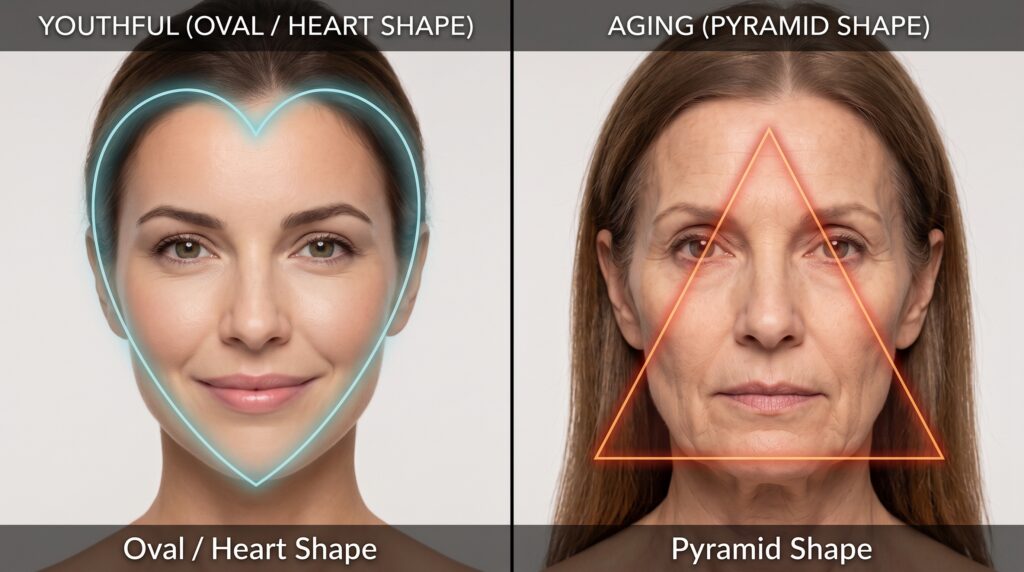
Temple hollowing negatively affects your overall facial balance. Hollow temples make the cheekbones look sharper (and not in a flattering way), the upper face looks narrow, jowling becomes accentuated, and the face flips from the desirable oval or heart shape, to a pyramid. The overall impression shifts from “refreshed” to “drawn.”
What can we do about it?
Replenish the volume that’s been lost in the temples! We have two non-surgical choices with proven clinical efficacy.
Hyaluronic acid (HA) filler
As of 2026, two HA fillers carry specific FDA approval for this indication: Juvéderm Voluma XC (approved 2024) and Restylane Contour (approved March 2026). Both are designed for deep placement along the bone to restore volume in the temples.
In Restylane Contour’s clinical trial, 91% of patients had satisfactory improvement at 3 months, with 85% maintaining the results through 18 months. Patients reported looking younger, less tired, and more refreshed.
Biostimulator
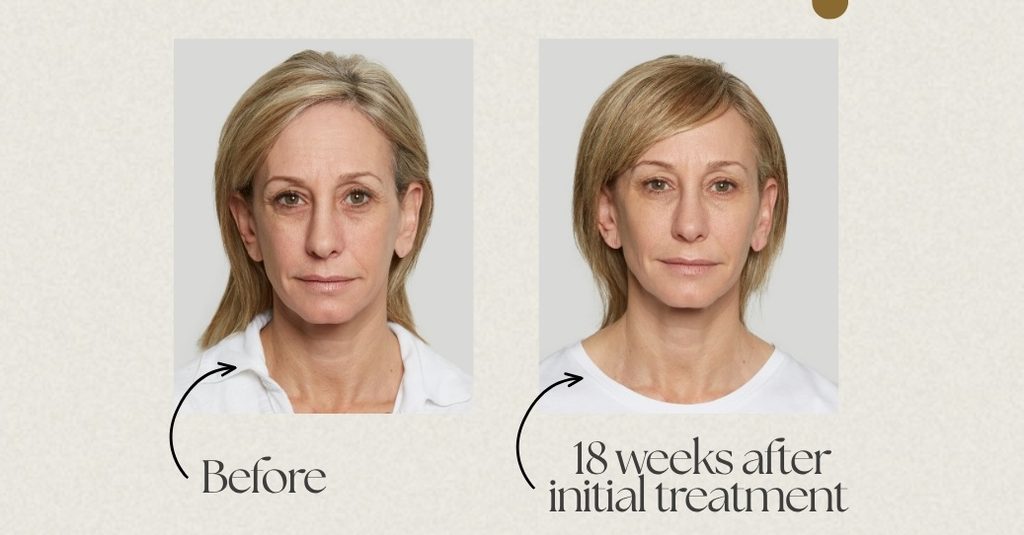
Poly-L-Lactic Acid (PLLA, brand name Sculptra) is a biostimlator that boosts your own body’s collagen production. Sculptra is placed both deep and superficial in the temples to achieve a softer, natural harmonization.
In a randomized controlled trial involving 174 patients, 96% achieved significant improvement in temple volume at 6 months with Sculptra, compared to 0% in the untreated control group. Sustained results lasted up to 2 years.
Treating the temples with PLLA not only filled local deficits, but also produced measurable improvements in skin elasticity and upper-to-midface contour.
What treatment looks like
A typical session for HA filler or Sculptra injection takes 20 to 30 minutes. An experience aesthetic medicine provider will make the recommendation of product, placement, and injection technique best suited for your anatomy, to maximize safety and efficacy.
Fillers and Sculptra can be administered during the same session.
Typically, treatment of temple hallowing is done at the same time as cheeks / midface, and jawline / chin, to restore a harmonious facial balance. Mild swelling and “puffiness” after injection is common and may take a few days to settle. Most people return to normal activities the same day.
Who is a good candidate?
If you notice a visible hollow or concavity at your temples — whether from aging, weight loss, or naturally lean facial structure — filler may be a strong option. Patients from their mid-30s onward commonly benefit. Your provider will assess the degree of hollowing, your health history, and your goals to determine whether temple filler, biostimulator, or a combination approach is the right fit.
Ready to address temple hollowing in Springfield?
At Eocene Medical Spa, we take a whole-face approach to volume restoration — and that includes areas most patients overlook. If you have been noticing that your face looks more tired or drawn than it used to, a complimentary consultation can help determine whether temple treatment is right for you. We are here in Springfield, Illinois, and we would love to help you look as refreshed as you feel.