
How Many Sessions to Completely Remove a Tattoo? The 4 Factors Behind the Number
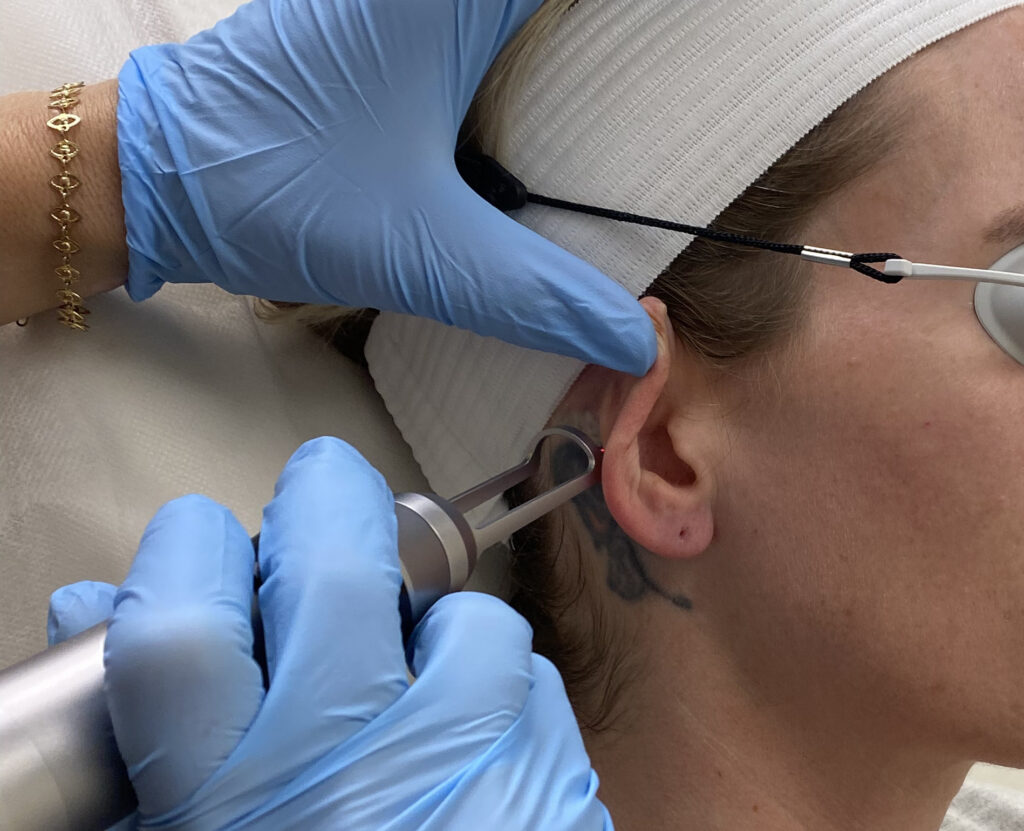
So you have a tattoo that you no longer love. A remnant from a past era of your life. The design and words now irrelevant. You want to clear room for something new, creative, and meaningful. Laser tattoo removal is the procedure for you. But how many sessions will it take?
If you’ve been researching about laser tattoo removal (how you landed on this blog article), you know a laser isn’t a magic eraser. It’s a process requiring multiple sessions spanning 6 months or longer.
I understand you feel frustrated when all you hear is vague answers like “multiple” and “months”. A straight number would feel more useful than a generic range like 6 to 12 or more sessions. But you know what: there isn’t one number. How many sessions and how long it takes to remove a tattoo depends on 4 factors:
- Your skin
- Your tattoo
- The machine you’re using to remove it
- Your end goal
How does laser tattoo removal work?
Laser is an extremely focused bundle of light. Modern tattoo removal uses picosecond technology where the laser light hits the tattoo ink and deliver very high energy levels during a super short amount of time (fraction of a blink of an eye). The pigment of the ink absorved the energy, shattering into tiny dust like particles. The surrounding skin is left intact because the laser flush is so fast that it’s gone before the skin cells (much bigger entities than ink pigments) has any time to absorbe the energy.
The picosecond laser breaks down your tattoo ink, but your body has to carry the shattered ink particles away. Over the next 4-8 weeks, your lymphatic and immune systems get to work. The ink starts to fade from the skin. Eventually the pigment particles are expelled from your body by the function of your live and kidneys.
How do the factors change how many sessions you need for tattoo removal?
Your Skin
Your natural skin tone affects how conservatively we must set the laser. Picosecond laser is safe for all skin tones, but skin pigments (melanin) will catch the laser light just like black ink. The energy level must be carefully adjusted to minimize the risk of damaging the skin.
Scarring in the area of the tattoo – whether from original tattooing or previous removal attempts – can impede laser energy transmission, requiring more passes to clear the ink.
Skin in areas with good circulatory supply (torso, upper arms) tend to clear ink faster than areas further away from the body’s core (ankles, wrists, feed).
Your Tattoo
Black and dark blue absorb the widest range of laser wavelengths and typically clear fastest. Red and orange colors also responds well, but we must use a different specialized wavelength. Greens and yellows need more sessions and sometimes additional wavelengths.
“Old school” and tribal style tattoos with dense outlines and packed ink tend to take more sessions than “new school” style with softer, gradations of ink application.
A tattoo with a cover-up underneath is really two tattoos stacked on top of each other, and it’s treated that way.
The Laser
We’ve looked at the clinical data – tattoo removal with picosecond lasers takes fewer sessions than the old nanosecond (Q-Switch) lasers. Classic session-count estimates, built on older-generation laser data, often overestimate what picosecond treatment actually needs. Picosecond pulses are shorter and more precisely timed to shatter ink into finer particles. Many patients experience as faster clearing than the “6 to 12” number quoted by FDA. Not universally, and not overnight — but often.
Moreover, picosecond lasers break down the pigments mechanically, instead of heating them, reducing the pain during and after the procedure, as well as the risk of burns and blisters.
Your end goal
Not everyone who comes for a consult of tattoo removal is looking to return to virgin skin. You may reach satisfactory fading – light enough to not stand out in the crowd, be reworked or covered up by your favorite tattoo artist – in half the number of sessions as what’s required for complete clearance.
What to ask at your consult
None of this is guesswork on our end. An in-person evaluation gives you a far more honest estimate than any generic number you’ll find searching online. We’ll take a look at your tattoo(s) and tell you how the 4 factors listed above apply to you.
We’ll also show you real before-and-after photos. Comparison of tattoos from the same-ink-family tells you far more than a percentage or a promise ever could — and it’s a fair way to gauge what do expect before you commit to a plan.
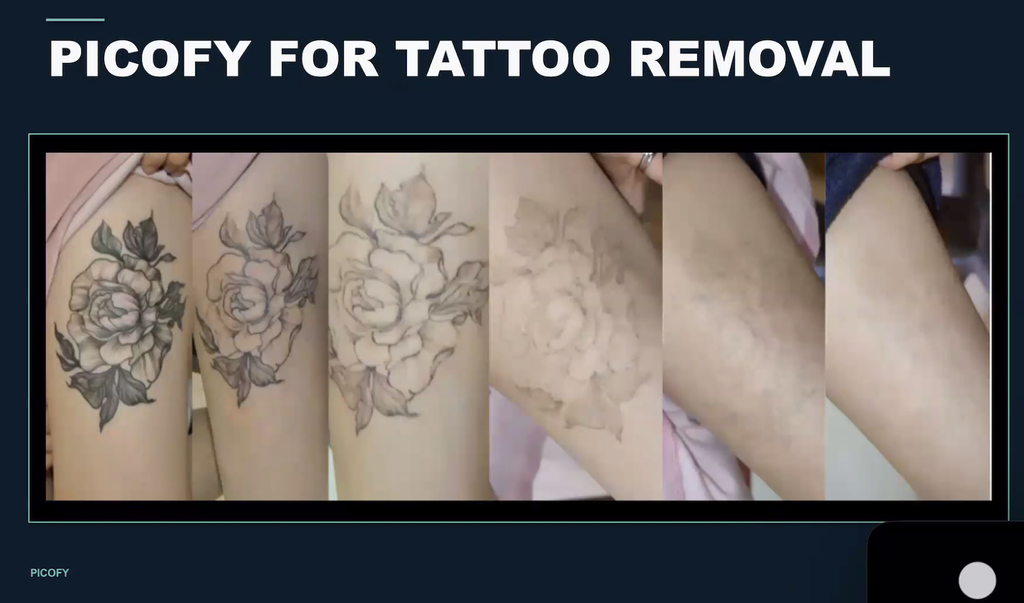
Ready to find out your real number in Springfield and Central Illinois?
A complimentary consultation at Eocene Medical Spa gives you an individualized session estimate based on your skin type, your tattoo’s actual color, density, location, and history, and your goals — not a generic range pulled from a search result. We’ll walk through your options honestly, including what picosecond technology can (and can’t) speed up for you.