
Laser Hair Reduction: A Patient’s Guide to Choosing the Right Technology
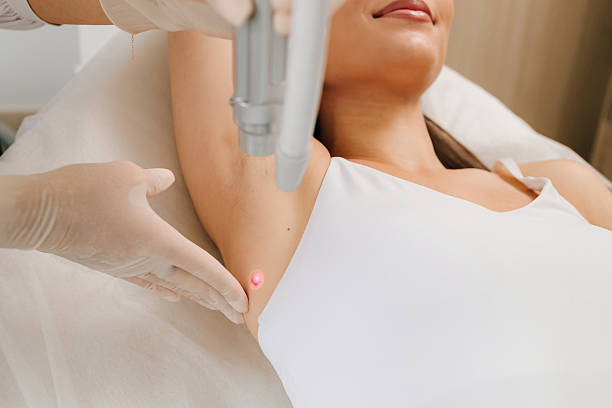
When you search for “laser hair reduction” or “laser hair removal” online, a lot of different devices pop up. While you might have come across words like Alexandrite, Nd:YAG, diode and IPL, it’s hard to distinguish what’s marketing trends and what delivers clinical efficacy.
Let’s be a little nerdy today and dig into what these jargons mean.
If you are seeking permanent hair reduction, understanding the technology behind the machine can make the difference between achieving satisfactory reduction and being frustrated by stagnant results.
How do the technologies work?
If you have unwanted body hair, what can you do? Traditional methods included shaving, waxing, threading, even plucking (ouch). But the hair always grew back.
A more modern and long term solution is photoepilation – using light energy to destroy the hair follicles. Light targets the melanin inside the hair follicles, offering a path away from the constant cycle of irritation, temporary removal, and regrowth.
The three types of technologies used for permanent hair reduction on the market are 1. True solid state lasers, 2. Diode lasers, and 3. Intense pulsed light (IPL).
The “True” Lasers (Alexandrite & Nd:YAG)
These solid-state systems are recognized as the clinical gold standard for permanent hair reduction. They are named by the materials through which the laser lights are generated and the wavelength of the light waves.
Unlike lower-powered alternatives, they utilize high peak power to deliver rapid energy pulses that effectively target the hair follicles while minimizing the spread to surrounding skin.
A properly outfitted medical spa should have both Alexandrite and Nd:YAG lasers available for hair reduction. By choosing the specific wavelength and further customizing the settings, we can provide the optimal results for patients with all skin types.
Alexandrite (755nm): Operating at the 755nm (red) wavelength, the Alexandrite laser is highly absorbed by melanin. This makes it exceptionally effective for individuals with lighter skin (Fitzpatrick Types I-III) and darker hair, providing precise targeting and high efficacy with minimal pain.
Nd:YAG (1064nm): The 1064nm (near infrared) wavelength of the Nd:YAG laser penetrates deeper into the skin while bypassing surface melanin. It is widely regarded as the safest and most effective option for darker skin tones (Fitzpatrick Types IV-VI), significantly reducing the risk of surface burns.
Diode Lasers
In diode lasers, the laser light is emitted by electrical activity generated from semiconductors. They are versatile and less expensive to manufacture than solid-state lasers.
A popular set up for hair removal machines contain diode lasers is the “tri-blend” technology which emits three wavelengths (755 nm, 810nm and 1064nm) simultaneously. This “one-size fits all” approach simplifies the settings needed for each patient and speeds up the hair reduction session.
However the diode lasers operate at lower peak power at any given wavelength so they rely on cumulative heating rather than targeted vaporization. This has two drawbacks. First is heat may escape from the hair follicle to the surrounding skin. Second is that sometimes you see hair miniaturization rather than complete destruction.
IPL (Intense Pulsed Light)
It is crucial to understand that IPL is not a laser. It utilizes a broad, non-coherent spectrum of light that is less targeted than true laser technology. Most at-home hair reduction devices uses IPL technology because they are economical and do not require professional training.
The lack of precision with IPL necessitates more treatment sessions at more frequent intervals. The results are also often thinning (miniaturization) of hair rather than disappearance.
Depending on the brand of light (determined by filters used in the IPL machine), IPL can carry a higher risk profile, particularly for those with darker skin tones.
Pros and cons of Alexandrite/Nd:YAG, diode, and IPL
Here’s a chart for easy comparison of the three main technologies on the market for permanent hair reduction.
| Technology | Mechanism | Strengths | Weakness |
| Solid state laser (Alex/Nd:YAG) | High peak power, short pulses at specific wavelengths that vaporizes hair follicles instantly. | Clinical gold standardPreciseHighly effectiveWavelength is skin type specific | Requires professional equipment and operator expertiseEach session may take longer |
| Diode | Blended wavelength and in-motion technique. Low peak power at longer pulse duration to produce cumulative heating | Versatile, able to use for all skin typesLess customization neededFaster speed, able to cover a large area quickly | May require more sessions to achieve desired reductionMay lead to hair miniaturization |
| IPL | Broad spectrum light, not coherent laser | Easy to use, accessible technology for consumers at home | Less preciseLess effective than lasersHigher risk in darker skin tones |
How to choose – match technology to your skin and hair type
Rather than asking which technology is best, we always consider which is clinically suited for your skin and hair type.
As a general rule, skin tone dictates the wavelength. Lighter skin with darker hair responds most effectively to Alexandrite (755nm) laser. You can achieve more than 80% reduction in hair density in just a few treatments. The pulse duration and power needs to be carefully calibrated, especially in the summer months when even the lighter skins may have a layer of tan.
For darker skin types and tanned skin, Nd:YAG (1064nm) is the preferred choice. This wavelength bypasses surface melanin, targeting the follicle deep in the dermis to ensure safety and prevent burns.
If the blended diode technology is used, the ratio of the 3 wavelengths (755nm, 810nm, 1064nm) should be adjusted to match the client’s skin type. It may not be possible to completely turn off any of the wavelengths though, depending on the machine.
Are there limitations to laser hair reduction?
Remember that the mechanism by which laser hair reduction works is by targeting the melanin in the hair follicles with light energy. Melanin absorbs the light, which is converted to heat, and the follicle is destroyed.
Laser hair reduction wouldn’t be effective on follicles that don’t contain much melanin – light blonde, silver, white, or gray hair. For these hair types, electrolysis is an alternative technique to achieve more permanent reduction.
Ready for permanent laser hair reduction in Springfield IL?
At Eocene Medical Spa, we use Quanta Evo Light 4V which is a true solid-state laser machine with Alexandrite 755nm and Nd:YAG 1064 nm wavelengths and highly customizable settings. We stand by the clinical efficacy and safety of this gold-standard technology to help our patients achieve satisfactory results. Book your complimentary consultation today for a personalized assessment of their skin and hair type, or check out our laser hair reduction pricing and packages here.