
Age Spots and Picosecond Lasers: What to Know Before Your First Session
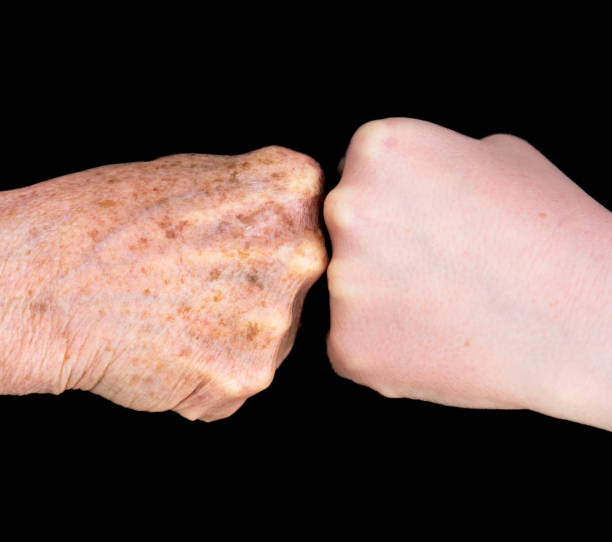
You’ve been wearing sunscreen for years (or not, if you’re a California beach girl like my friend Terry, or if you’re a golf enthusiast like my co-worker Larry). None of us use sunscreen perfectly — a missed day at the pool, a few sunburns in college. And now, somewhere in your 40s or 50s, flat brown spots are showing up on your hands, cheeks, and shoulders as if they had their own agenda.
They do. And it’s a long one.
What age spots actually are
Age spots — also called sun spots, and dermatologists call them solar lentigines — are clusters of pigment that accumulate in skin that’s absorbed years of ultraviolet light. They’re not dangerous. They’re not a sign of disease. But they are a receipt: your skin documenting every sunburn, every afternoon without SPF, every decade of cumulative UV exposure.
Up to ninety percent of fair-skinned adults over sixty have them. And not just the fair-skinned. Age spots are common across all skin tones. Hands, face (especially temples and cheeks), shoulders, and forearms are the usual targets. These areas spend the most time in the sun.
The important first step is confirming that a spot is truly benign. As the American Academy of Dermatology recommends, see a board-certified dermatologist before pursuing any cosmetic treatment. What looks like an age spot can occasionally be something else, and a trained eye makes that distinction quickly.
How picosecond lasers work on age spots
Traditional lasers use heat to break up melanin. Picosecond lasers do something different — they fire in trillionths of a second, generating a pressure wave that shatters pigment particles into fragments small enough for your immune system to clear naturally.
Less heat means less collateral inflammation, which translates to a lower risk of post-inflammatory hyperpigmentation — the dark rebound marks that can follow the traditional thermal treatments, especially in medium and deeper skin tones.
Picosecond lasers are also amazingly effective. In a 2025 systematic review of 41 clinical trials, picosecond lasers achieved clearance rates between 68 and 93% for solar lentigines, the highest among device-based treatments studied. It’s much more effective than CO2 laser, Q-switch laser, IPL, chemical peels, cryotherapy, and topical retinoids.
What a session actually looks like
Most patients describe the sensation as a series of quick, warm snaps — like a small rubber band. We apply a topical numbing cream beforehand to keep things comfortable. Sessions for isolated age spots typically take fifteen to thirty minutes.
A fractional picosecond rejuvenation protocol can be added to the spot treatments to improve overall skin tone and texture.
Afterward, treated spots often darken temporarily — that’s the shattered pigment rising to the surface. Over the next 2-4 weeks, those darkened spots flake away and fade. Redness is usually mild and resolves within a day or two.
Most age spots respond well in one to three sessions, spaced about four to six weeks apart. The number depends on how deep the pigment sits, how many spots you’re treating, and your skin type. We customize wavelength and energy settings to your Fitzpatrick type — this isn’t a one-size-fits-all protocol.
Who’s a good candidate
If you have clearly defined, flat brown spots that have been confirmed as benign solar lentigines, picosecond laser is a strong option.
The best results tend to come from patients who:
- Have distinct, well-bordered spots (vs. diffuse sun damage, which may respond better to IPL or a combination approach)
- Haven’t had a recent tan or significant sun exposure in the treatment area
- Are committed to avoiding direct sunlight and wearing daily broad-spectrum sunscreen afterward
Melasma is a different conversation entirely. It looks like pigment, but it behaves differently — it’s chronic, hormonally influenced, and laser-first approaches can make it worse. Picosecond laser can also work well for melasma but calls for a different treatment protocol. If you’re not sure which type of discoloration you have, that’s exactly what the initial consultation is for.
The sunscreen conversation
Here’s the part that matters as much as the laser itself: treated spots will fade away but new spots can appear if the skin continues absorbing UV damage. A picosecond laser can clear what’s there, but daily SPF 30 or higher is what keeps the canvas clean going forward. Broad-spectrum, every morning, reapplied if you’re outdoors — this is the highest-return investment in your results.
Ready to address age spots and sun spots in Springfield, Illinois?
Every spot has a story, and every skin type needs a tailored approach. A complimentary consultation at Eocene Medical Spa lets us evaluate your pigment concerns, confirm what we’re treating, and map out a realistic plan. It may be one session or a short series of Picofy picosecond laser treatments. We’re here when you’re ready.